
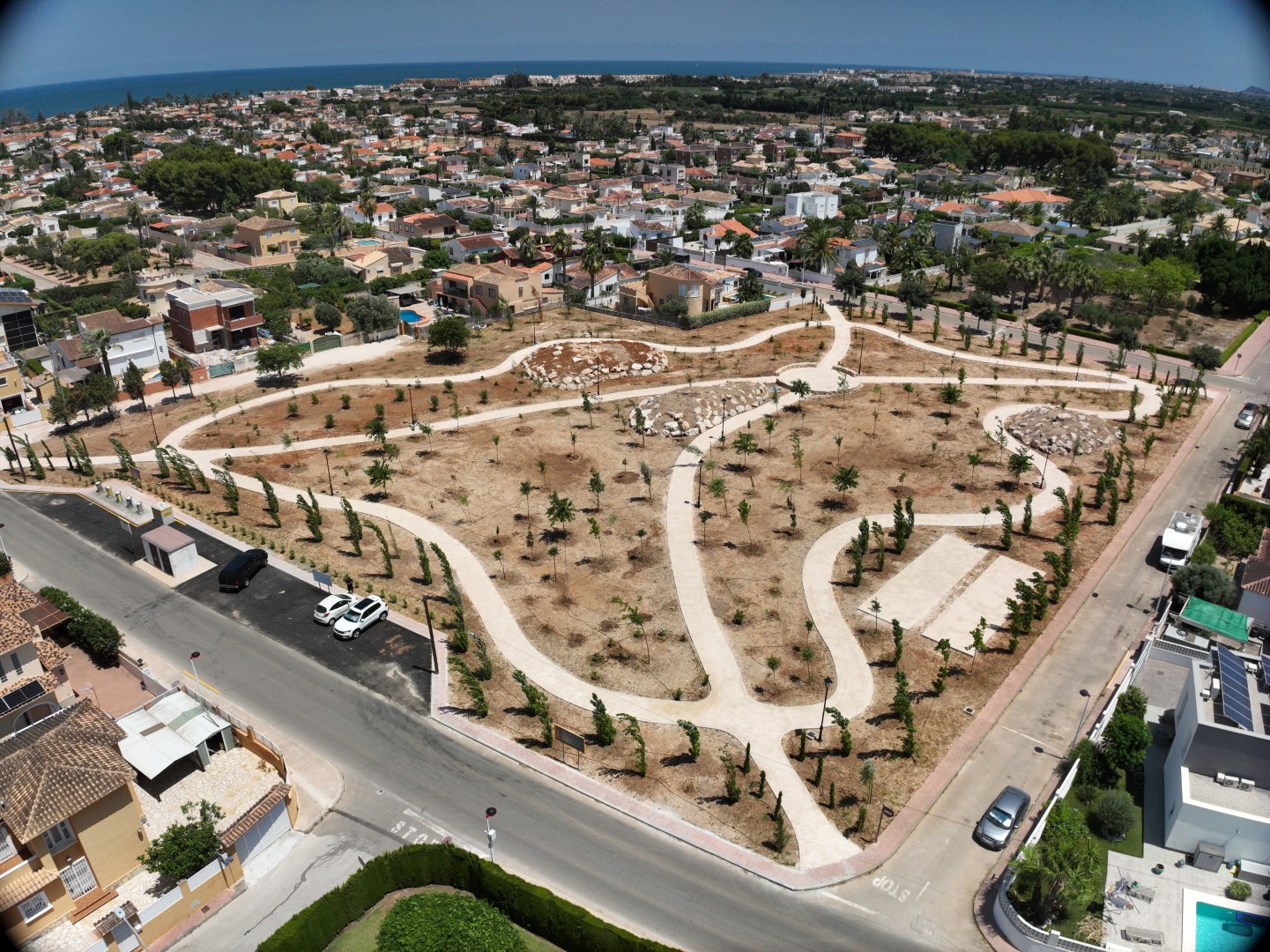
Landscape Regeneration and Resilient Green Infrastructure
TECHNICAL SHEET
- Typology: Environmental Engineering, Landscaping and Urban Planning.
- Area of action: > 10,000 m²
- Plant elements: More than 400 trees and shrubs.
- Status: Executed.
The BACKGROUND: From a degraded space to an environmental opportunity. The intervention area was originally in a state of high degradation, having been used as a landfill and uncontrolled manure dump. The main challenge of the project was the comprehensive recovery of the land and its transformation into a green infrastructure of high ecological and social value for the municipality, integrated into the residential urban fabric.
THE TECHNICAL SOLUTION: Engineering for resilience. The project has been designed away from the classic concept of an ornamental park, opting for a true climate resilience machine based on three technical pillars:
- Water Management and Sustainable Urban Drainage Systems (SUDS): A specific topography has been designed with strategic slopes and rocky areas. In episodes of torrential rain (cold drop), these geometries allow controlled flooding, retaining and delaying surface runoff. This prevents the collapse of the sewer and encourages slow infiltration of water for the natural recharge of the aquifers.
- Strategic Botanical Selection: A massive plantation of more than 400 specimens has been carried out, combining forest and riverside species adapted to the Mediterranean climate. Species with low water consumption and high resistance (Quercus ilex, Olea europaea, Ceratonia siliqua or Juniperus) have been prioritized, along with deciduous species (Populus, Celtios australis and Salix) in bioretention areas to combat the heat island effect in summer.
- Carbon Scupper: In addition to the positive acoustic and visual impact, the calculation of the tree mass showed a capture capacity of between 8 and 12 tons of CO2 per year in its adult stage. This is equivalent to neutralizing the emissions of a combustion vehicle for 50,000 kilometers per year, turning space into a key asset for local decarbonization.
FINAL RESULT: A new green lung that not only promotes well-being and community recreation through its layout of winding paths, but also acts as a protective shield against floods and the climate emergency.